Is a Bootcamp Worth It in the UK? An Honest Cost-Benefit Breakdown for 2026
Bootcamps promise a six-figure tech career in twelve weeks. The reality is more nuanced. Here is the honest UK cost-benefit analysis — and when a certification pathway beats a bootcamp.
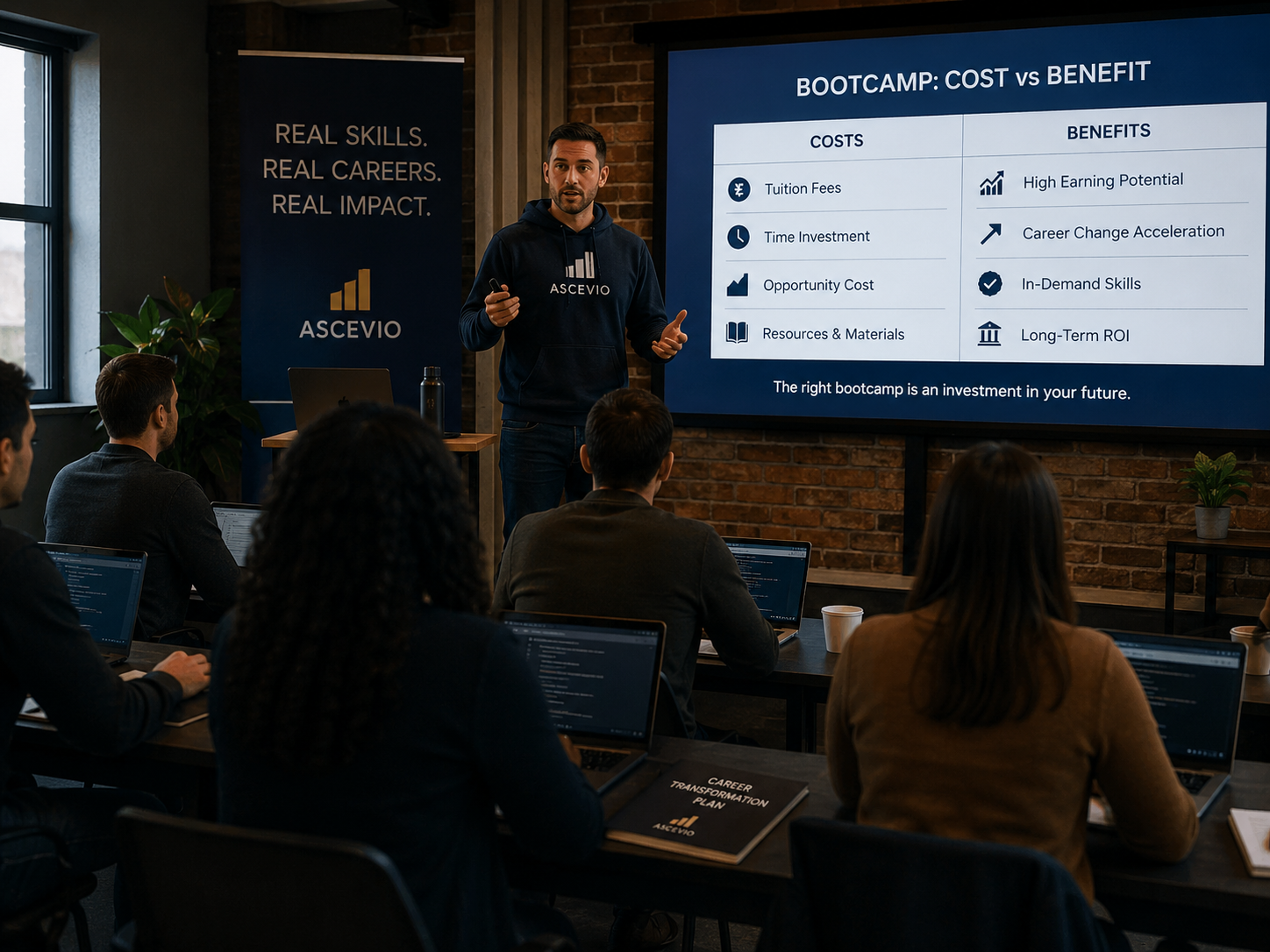
Every few months a "I quit my job, did a 12-week bootcamp, and landed a £70k tech role" story goes viral. These stories are real — but they are the visible tail of a distribution, and treating them as the expected outcome is how people lose money and momentum. As a platform that exists to move people into UK tech, we have no interest in talking you out of training. We have every interest in you choosing the right kind. Here is the honest breakdown. First, what bootcamps do well. A good bootcamp compresses learning, provides structure and accountability, gives you a cohort of peers, and — crucially — often includes genuine career support. For software development specifically, where employers care more about whether you can build than which certificate you hold, an intensive coding bootcamp can be a legitimate and fast route. The immersion works for people who learn best under pressure and can dedicate full-time hours. Now the honest caveats. UK bootcamps commonly cost £6,000–£12,000, sometimes more. That is a serious investment, and the outcomes are uneven. The strong placement statistics that bootcamps advertise often rely on generous definitions of "placed" and exclude people who dropped out or did not find work. The job market for junior developers has also tightened — there are more bootcamp graduates competing for entry roles than there were a few years ago. None of this means bootcamps do not work. It means the average outcome is more modest than the marketing, and your individual outcome depends heavily on your effort, your portfolio, and the market at the moment you graduate. Here is the framework we use. Choose a bootcamp when the destination is genuinely skills-demonstrated rather than credential-screened — primarily software engineering, and to some extent UX/UI design and data engineering — and when you can commit to full-time immersion and aggressive portfolio-building afterward. The bootcamp is the start, not the finish; the people who succeed treat graduation as the moment the real work begins. Choose a certification pathway instead when the destination is credential-screened — project management, cyber security, IT support, data analytics, cloud administration. In these fields, employers screen on recognised certifications (PRINCE2, CompTIA Security+, Google/Microsoft certs, ITIL), the study is far cheaper, and you can do it part-time around your existing job without taking a financial risk. A PRINCE2 path costs a fraction of a bootcamp and is exactly what a UK employer is looking for. For most of the career changers we work with, this is the lower-risk, higher-probability route. The decision often comes down to risk tolerance and runway. A bootcamp asks you to bet a large sum and, frequently, your income for several months. A certification pathway lets you keep earning while you retrain, then move when you are ready. Neither is "better" universally. They suit different people and different destinations. The trap that costs people most is paying for a bootcamp in a field that is actually credential-screened — for example, an expensive "cyber security bootcamp" when the same employers simply want a CompTIA Security+ you could have earned for a fraction of the cost. Match the training type to how the field actually hires. If you want an honest, no-pressure view on whether your specific destination calls for a bootcamp or a certification pathway — and what each route would realistically cost and return for you — request the Ascevio prospectus or book a discovery call. We will tell you straight.